Powered By Blogger
Showing posts with label Fu Sheng. Show all posts

Friday, November 30, 2012

Shaolin Martial Arts (1974), starring Fu Sheng, Chi Kuan Chun, Gordon Liu Chia Hui, Bruce Tong Yim Chaan, Irene Chan Yi Ling, Leung Kar Yan and Johnny Wang Lung Wei. Directed by Chang Cheh.

All images courtesy Celestial Pictures.
FOR anyone who likes their Shaw Brothers flicks with Shaolin kung fu, Shaolin Martial Arts will live up to its name for you adequately. The third of four Shaolin-based films made by director Chang Cheh to be released in 1974, it initially attracted moviegoers because of the pairing of rising stars Fu Sheng and Chi Kuan Chun, but it's since been rediscovered in the home video age for the early presence of popular performers Gordon Liu (not yet shaving his head), Leung Kar Yan (not yet sporting a beard) and Wang Lung Wei (not yet using a finger to make his point). With a script by Cheh and the prolific Ni Kuang that deviates some from the convention found in most of these films, it catches the viewer's attention with a low-key, moody story.

Lau Kar Wing
Long after the Shaolin Temple has been burnt down (heroes like Fang Shih-yu and Hung Tsi-qwan are mentioned in the past tense), the Qing court gets word from the province of Guangdong of the discovery of Shaolin rebels at a kung fu school run by Lin Zan Tian (Lo Dik). They arrange to have Wu Chung Ping (Kong Do) open and manage a Manchu school nearby, using it as a subterfuge for rooting out the fugitives. The Manchus finally strike at a ceremony jointly attended by the schools, killing a Shaolin student (Lau Kar Wing) in order to provoke a fight, but their strategy backfires when the agitators trounce the Manchus, including Ping. Not surprisingly, once the Qing authorities arrive, they side with the Manchus, claiming nothing more happened than a "gang fight", thus denying the Shaolin men justice for their slain brother.

left to right: Leung Kar Yan and Johnny Wang Lung Wei
Disappointed Ping and his pupils failed to defeat the rebels, a Qing general (Lee Wan Chung) offers Ping some assistance via his confidante, kung fu master He Lian (Fung Hak On). Lian has summoned his two favorite disciples to help the Manchus eradicate the Shaolin agitators: Ba Kang (Leung Kar Yan) and Yu Pi (Johnny Wang Lung Wei). Kang is highly trained at Steel Armor kung fu, which makes his skin tough and invulnerable to blows; Pi has mastered Qi Gong, which enables him to withstand a blow from an opponent and "rebound the power of the blow", injuring "the one who initiated the punch."

top, left to right: Fu Sheng and Chi Kuan Chun
below, left to right: Bruce Tong Yim Chaan,
Tino Wong Chueng and Gordon Liu Chia Hui
Soon enough, the dissidents find out Kang and Pi are forces not to be trifled with when the duo leads a group of Manchus on a visit to Tian's school; once there, they kill his two best students in brief, one-sided matches. Among those who witness the spectacle are Shaolin aspirants Li Yao (Fu Sheng), Chen Bao Rong (Chi Kuan Chun), He Zhen Gang (Gordon Liu Chia Hui) and Mai Han (Bruce Tong Yim Chaan). Knowing they're in over their heads if they fight this deadly twosome, they flee from the Manchus and report what's transpired to the ailing Tian, who lives in seclusion with his daughter, Lin Zhen Ziou (Irene Chan Yi Ling), and his niece, Ah Wai (Yuen Man Tzu).

Lo Dik
Once he's been updated, Tian knows exactly what kind of kung fu they're dealing with, and he believes the Eagle Claw and Rolling Eagle Claw styles will best take out Kang and Pi, respectively. However, he's no expert on those martial arts, so he has Gang and Han go to a reclusive sifu known as the "King of Eagle Claw" (Chiang Nan) for a few months of special training, while Yao and Rong stay with him and continue their Shaolin training.

Eventually, Gang and Han complete their training, but on the way back to see Tian, they get word four Shaolin students have been recently captured by the Manchus, prompting them to go into rescue mode. For an instant, it looks like their new abilities put them on equal footing with Kang and Pi, but they fall short of that. Gang and Han are killed, but the pupils manage to escape the Manchus' grasp and tell Tian about the bad turn of events.

left to right: Simon Yuen Sui Tien and Feng Yi 
Realizing he tragically underestimated Kang and Pi's advanced skills, Tian has Yao and Rong seek out two other sifus whose areas of expertise may be more helpful toward ending the murderers' reign of terror. Yao goes to Master Liang (Simon Yuen Sui Tien) to learn Tiger and Crane Fist (to stop Kang), while Rong locates Master Yan (Feng Yi) so he can learn Wing Chung (to stop Pi). In the beginning, the workouts are long, tiring and exasperating (Yao has to wait a whole month before Liang agrees to work with him!) to the point both consider quitting, but they quickly change their minds once Ziou and Wai disclose how Tian defiantly committed suicide when Kang, Pi and the Manchus came calling on him not long after they left. Now refocused, the young men dive into the training with a passion. Months later, Yao and Rong, eager to avenge the deaths of Tian and their many Shaolin brothers, are finally prepared for a showdown with Kang and Pi, mano-a-mano....

top, left to right: Irene Chan Yi Ling and Yuen Man Tzu
bottom, left to right: Kong Do and Funk Hak On
As a whole, Cheh and Kuang's screenplay for SMA doesn't get mired in formula because the formula is a work in progress. The narrative fares better when shown from the viewpoint of the Shaolin rebels. Vicariously, we feel their anger when their comrades are slain; their camaraderie as they hide out from the Manchus; and their disappointment and elation as they go through the rigors of learning kung fu. What doesn't come off as well are the villains. Kang and Pi are intimidating enough, but their limited screen time lessens their menace; with Ping and Lian, their roles are way underdeveloped, and a good rewrite could drop either of them without harm to the story. Some have reserved their loudest complaints for Ziou and Wai. It's possible the women were added at the suggestion of the Shaws (the romantic angle is played up in the original movie trailer, included on the IVL DVD), over the objections of director Cheh. (Did Kuang write them in?) I have no hangups about the ladies (though their girlish behavior is laid on thick), and it's to the credit of Kuang and/or Cheh they're not depicted as damsels in distress.

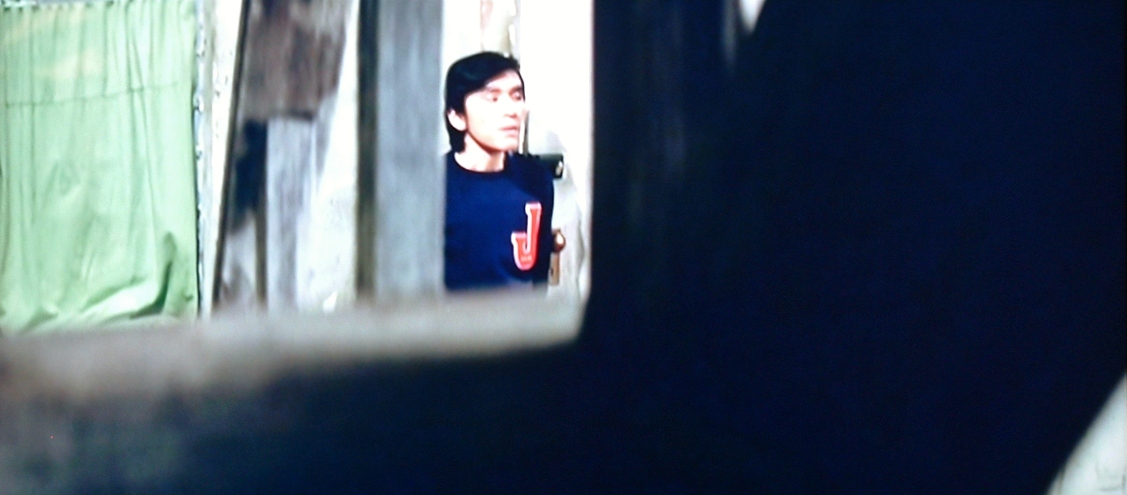
Despite having young ladies in his yang gang scenario, Cheh directs SMA assuredly, with as much attention given to the pensive moments as are the boisterous ones. The photography by Miyaki Yukio (Kung Mu To) helps to set the proper atmosphere, particularly with a good usage of darkness in well composed low-lit scenes. Kwok Ting Hung's editing is adroit, enhancing the grace, beauty and intensity Lau Kar Leung and Tong Gaii bring to the choreography of the training sequences and the fights. (Only the climatic battle ends with a whimper, but that's more of another script problem.)

The cast handles their parts capably. Fu Sheng and Chi Kuan Chun make a great team, both at (or near) their physical peaks, and while Chun gets his fair share of acting opportunities (and is very good), Sheng carries the picture with his winning personality and an underplayed performance, even during his comedic scenes with the winsome Yuen Man Tzu. Irene Chan Yi Ling (forever "Princess" in Cheh's Young People) shows impressive range in what time she gets to be seen as Tian's daughter (and Rong's girlfriend). Lo Dik, Feng Yi, Chiang Nan and Simon Yuen Sui Tien are great as the Shaolin sifus, with Tien a true scene stealer as the obstinate Liang, who gives Yao no mercy. Supporting player Bruce Tong Yim Chaan gets a rare weighty role as the Shaolin student fated to die at the hands of Pi; why this above average actor and fighter didn't get a chance at stardom is mystifying. As already noted, Kong Do (Ping) and Fung Hak On (Lian) are given skimpy roles, but they give enough of a spark to them they don't come across as cardboard cutouts. As always, other familiar Shaw faces are present throughout, including the likes of Tino Wong Chueng, Dang Tak Chueng, Chan Dik Hak, Li Chen Piao, Lo Wai and Lam Fai Wong.

left to right: ? and Leung Kar Yan
What about those three newcomers mentioned earlier? For Leung Kar Yan and Lang Lung Wei, SMA was their second Shaw movie (but the first to be issued), while Gordon Liu had a few more films under his belt prior to this one. So it stands Liu is the more accomplished actor and gets to show off his kung fu capabilities in a memorable fight with Yan, demonstrating his potential as star material years before he got his big break with The 36th Chamber of Shaolin. As the efficient killing machines, Yan and Wei play don't get to display any depth but they are convincingly tough. However, Yan arguably gets the meatier role as Kang, highlighted by one of the movie's best scenes where a prostitute's attempt to arouse him fails because, thanks to his Steel Armor training, he's capable of retracting his sex organs into his body cavity!

The IVL DVD is the best way to experience SMA. It boasts a remastered, anamorphic picture, the original mono Mandarin soundtrack and English subtitles. Extras consist of bios and newly made Shaw trailers by Celestial Pictures. (I first saw this years back in bootleg form with the English dub, which I didn't like much, thanks to the overly sweet voices given to Ziou and Wai. Seriously, you get a better feel for the emotional tone of the movie if you see the legit DVD. Watch that, not the bootleg.)

SMA is early in Cheh's "Shaolin Cycle", and it has the bumps in the script to prove it. Fortunately, the modest imbalance (a.k.a. the weak villainy) doesn't hurt what is an exciting and fun (even thoughtful) film. Most of all, with Fu Sheng, Chi Kuan Chun, Gordon Liu, Leung Kar Yan and Lang Lung Wei participating, it's definitely not boring.

Brother Fang cuts to the chase: "A special dose of Shaolin, featuring the ascending Fu Sheng and early looks at Gordon Liu, "Beardy" and Lang Lung Wei. Recommended!"


Keeping it trivial....

Brother Fang, Shaolin Temple.

Thursday, March 8, 2012

The Deadly Breaking Sword (1979), starring Ti Lung, Fu Sheng, Shih Szu, Michael Chan Wai Man, Ku Feng and Lily Li Li Li. Directed by Sun Chung.

(All images courtesy Celestial Pictures, unless noted otherwise.)

BACK when The Deadly Breaking Sword was released on 4/12/79, the second movie by director Sun Chung to co-star Fu Sheng and Ti Lung had to contend (primarily) with the kung fu comedies then trending at the HK box office. As a result, the Shaw Brothers production simply (according to writer Mark Pollard) "appeared at the wrong time", and it wasn't long before it was gone, replaced by other Shaw pictures of varying quality. Today, the film lingers in the shadow cast by its predecessor, the cult classic The Avenging Eagle (1978), rescued from obscurity as much by Fu Sheng's untimely death in 1983 as it is by recent critical reassessments of Chung that rank him as one of Shaw's better directors.

left to right: Fu Sheng and Ti Lung
Somewhere in the martial arts world, there are two heroes. The experienced one is Tuan Changqing (Ti Lung), who is called "The Deadly Breaking Sword" because his dead adversaries wind up with a piece of his sword punctured in their chests. He's arrogant about his proficiency with a sword; in fact, he's a bit of an eccentric about it, which is reflected in his pre-fight customs of arriving early, wearing a new change of clothes and providing coffins to those he slays. Then, there's Xiao Dao (Fu Sheng). He's "The Little Dagger" because his weapon of choice is a knife. Though he's a scoundrel, barely getting by on his wits and kung fu prowess, he's anything but evil.

left to right: Ti Lung and Michael Chan Wai Man
Changqing's latest battle is with Lian Shan, "The Throat Piercing Halbred" (Michael Chan Wai Man). Where he has taken out only bad guys, Shan's own high body count has partly come through indiscriminate killing, so Changqing knows he must be done away with. Unfortunately, it ends as a draw with both wounded, though Shan escapes with a bit of broken sword embedded in him.

In a town not far from Changqing's location, Dao finds himself temporarily working as a security guard at a gambling house, owned by Luo Jinhua (Lily Li Li Li), in order to pay off his gambling debt. If that wasn't bad enough, Jinhua's smitten with him, and she's determined to keep him there permanently. As soon as Dao earns any taels of silver, she tricks him out of his money.

Shih Szu
Changqing and Dao eventually cross paths due to their mutual interest in Lin Linxyu (Shih Szu), a high class prostitute who's recently set up shop at the local brothel. In secret, she's looking for Guo Tiansheng, who she knows by the nickname "The Killer Doctor" (Ku Feng). She wants him dead for double-crossing her thief of a brother, Chen Yinggang (Ngaai Fei), collecting the reward for his capture and leaving him to rot in prison. Initially, she tricks Changqing to see her and proposes to pay him to slay Tiansheng. As a hero, Changqing won't take money and isn't sure Tiansheng (a doctor with good standing in the community) is "TKD", but, liking Linxyu, he goes to see him and determine if he's "TKD". He's not convinced.

left to right: Lily Li Li Li and Fu Sheng
Undeterred by this setback, Linxyu hires the desperate-for-money Dao to kill Tiansheng, but Changqing, who has grown to respect him after their many hot-headed encounters, persuades him not to follow through, paying off Dao with a money order double the amount Linxyu offered him. Ecstatic, he returns to the gambling house and shows Jinhua the money order, bragging he now can pay off the debt and be free of her. As he boasts about this victory, she quietly sets the piece of paper on fire. Finally deducing she's responsible for hindering his exit, Dao grabs her and carries her to a nearby well. He holds the screaming lady by the ankles over the top, optioning whether to drown her or not....

left to right: Michael Chan Wai Man and Ku Feng
All the while, the wounded Shan has been recovering at Tiansheng's residence after the doctor removed the sword fragment from his chest. Discovering Shan is a rare survivor of a battle with the great Changqing, Tiansheng realizes he has at hand a fighter superior to all his hired goons combined. Through the wonders of acupuncture, he nurses Shan back to health, making him stronger than he ever was, and after his confrontation with Changqing (who threw wine on the old man), Tiansheng's resolved to use Shan to kill the hero as revenge.

left to right: Ngaai Fai and Ti Lung
Meanwhile, Changqing tells Linxyu he stopped Dao from killing Tiansheng, still believing he's not "TKD". She begs him to hear Yinggang's side of the story at the prison. Listening to her brother, he finds out she was right after all and frees him. With help from Yinggang and Linxyu, he plots to lure Tiansheng to the brothel and kill him. When Tiansheng shows up, he brings with him the new and improved Shan, and the guy's got a score to settle with Changqing....


Unlike Chung's previous two wuxias (The Proud Youth and TAE, both '78), Ni Kuang's script for TDBS is not an adaptation from a work of popular Chinese literature, which is a big plus. Minus the hang ups of a complicated scenario with too many characters to keep track of, the story (save for a few hiccups) flows nicely with no trace of padding. Along with a balance of the usual action and suspense is a marked streak of satire that pokes fun at the kind of movies that were Kuang's bread and butter, as evidenced by the narcissistic, quirky Changqing and the "loose cannon", comedy relief Dao. (Some consider Dao to be a Jackie Chan-type of clown, but I think Kuang could've been inspired by Sammo Hung as well.)

The cinematography by Cho On Sun and Lam Nai Choi is rich and atmospheric, notable for some flourishes with the Steadicam and the occasional use of a freeze frame for punctuating some of Dao's antics. The editing by Chiang Hsing Lung and Yu Siu Fung keeps pace with the varying tempos of the film with assurance, particularly giving a spark to Tong Gaai and Wong Pau Gei's fine action choreography, which keeps mostly to the ground except for rare wirework.

Another picture of Shih Szu, just for the heck of it.
With the cast, we have the novelty of some of the lead (and supporting) actors from TAE also appearing here. As Changqing, Ti Lung brilliantly plays it straight, subtly letting the viewer know he's enjoying his role of a pompous swordsman. Though some are turned off by his clowning, I think Fu Sheng gives likability to his grating interpretation of Dao, making him the perfect foil to Changqing. (Like on TAE, Sheng and Lung work well with each other.) Michael Chan Wai Man and Ku Feng are in familiar territory as Shan and Tiansheng, respectively, but they perform their parts well. While Shih Szu doesn't get to kick ass here, she demonstrates her acting range capably (in addition to looking lovely) as Linxyu. Compared to Szu, Lily Li Li Li gets a more involving (albeit limited) role as Jinhua, continually thwarting Dao's attempts to escape her until she goes too far. Among the supporting players, look for Chan Shen, Lam Fai Wong, Shum Lo, Wong Ching Ho and Kara Hui Ying Hung.

(Image Entertainment)
Two versions of TDBS are currently available. The IVL DVD has a good picture, but (like some other IVL reissues of Chung's films) newer music and foley are needlessly tacked on; while this import has no English dub, you do have the option of listening to the feature in Mandarin or Cantonese. The Image DVD is much better, having the original Mandarin and English soundtracks; the picture isn't quite as good as the IVL's, but it's not awful, either. Interestingly enough, after comparing the English subs on both discs, I notice there's a slight difference between parts of the translations, but they're not major ones. "Extras" on these discs are limited, ranging from photo galleries to trailers from Celestial Pictures.


I should say I have a slight bias toward TDBS, having seen it before TAE, and after watching both several times, I still get a kick out of TDBS, while conceding TAE is the stronger picture. With Kuang's original story, Chung doesn't have the (presumed) burden filming an adaptation can have, so he directs with a relish that carries over to the cast and crew. There's a near-perfect balance of light and dark that helps sell the heroes and the leading ladies; if the mood were all somber, it would be hard to find affinity with four people who aren't exactly amiable. Overall, TDBS is another enjoyable film with the winning combination of Chung, Lung and Sheng, and it's lamentable the fates conspired in such a way there wouldn't be any more.

Brother Fang Cuts to the chase: "A subversive send up of 'Old School' wuxia movies that doesn't lack for drama or thrills. An essential addition to your Shaw Brothers collection if you love Sun Chung, Ti Lung and Fu Sheng. Three and a half stars (out of four)."

Keeping it trivial....

Fang Shih-yu, Shaolin Temple.

P.S.-- Buy The Deadly Breaking Sword here.

Thursday, March 24, 2011

Four Riders (1972), starring David Chiang, Ti Lung, Chen Kuan-tai and Wong Chung. Directed by Chang Cheh.

(All images courtesy of Celestial Pictures.)

MUST a movie make sense to be enjoyable? Not really, and don't believe any high-brow film critic who says different. (Once in a while, they like something a little illogical, too.) Even if there's a followable storyline, it doesn't take much from the filmmakers' side of things to unintentionally envelop the audience in a fog if they're trying to establish a particular look or style to their picture. Sometimes, the results can come back to bite them on the butt, artistically and financially; when they work out favorably, it can be a unique anomaly of cinema, if not a cult classic. That said, does the Shaw Brothers oddity Four Riders measure up with the other entertaining doses of yang gang from the formidable Chang Cheh?

Somewhere in South Korea, it's the end of the Korean War. A Chinese veteran of the conflict, Feng Xia (Ti Lung), drives to Seoul for some relaxation after collecting his pension (in American currency) and liberating a jeep from an army colonel (Lo Wai) he recently decked. Along the way, he picks up a fellow soldier, Gao Yinhan (Wong Chung), who's heading in the same direction to see Li Weishi (Chen Kuan-tai), a retired First Lieutenant recuperating at a hospital from wounds received in battle.

Not long after the two part company in the city, Xia stumbles upon some guys who've just pummeled an American GI to death; to be exact, they're members of a drug cartel run by Boss Hawkes (Andre Marquis), and they killed the man for his refusal to be a mule on his return trip to the US. Xia is overwhelmed by them before he can leave, and Hawkes' second-in-command, Lei Tai (Yasuaki Kurata), frames him for the crime. As fate goes, until a trial date is set, the injured Xia is confined by SK MPs in the prison ward of the same hospital where Yinhan's visiting Weishi. Yinhan is certain Xia is innocent, and since Weishi feels he has no chance at being found not guilty, he suggests Yinhan get a gun that his nurse, Song Hua (Ching Li), can smuggle to Xia and use for a quick escape.

Meanwhile, when Xia's army buddy, Jin Yi (David Chiang), reads of his plight in a newspaper, he knows something fishy's going on, too; based on all the time he's spent visiting lovely hostess Wensi (Lily Li) at the Hello John Club owned by Hawkes, he knows of the illegal activities going on. He calls out Tai about what's being done to Xia, but he's soon beaten up by him and Hawkes' other flunkies. Only Hawkes' brassy girlfriend, Yinhua (Tina Chin Fei) saves him from a premature demise; after a night of sex with her, he sneaks off.

After a few leads that go nowhere, Yinhan finally gets lucky when he's offered a gun...by Tai; Hawkes wants Xia dead immediately, and he says he'll pay anyone who'll do the task. (I'm guessing the payment consists of hot lead.) Shrewdly, Yinhan pretends to accept the offer, and before too long, Xia breaks out of the hospital with Weishi and Yinhan. Tragically, Song Hua is shot by Hawkes' men as she flees with them, to the horror of Weishi.

Eventually, Yi joins up with the three fugitives. On the run from the SK army (while keeping one step ahead of Hawkes' confederates), they devise a plan to bring down Hawkes' operation and exonerate themselves in the eyes of SK military justice. While Yi returns to the Hello John to look for incriminating paperwork, the other three confront Tai and Hawkes' other men in a free-for-all at a gymnasium. There's only one complication to all of this; unknown to the four, the SKs are now on their way to the gym, and they believe the Chinese are part of Hawkes' gang....


The title Four Riders (re-titled as Strike 4 Revenge in the US) comes from a scene when Weishi reads aloud his favorite piece of Biblical scripture to his nurse; it's the only time this reference shows up in the entire film. In turn, the only things these four heroes ride are jeeps, and they're more concerned with saving their own hides than unleashing an apocalypse on the world. It's their urgency to rescue Xia, along with the need for all of them to survive long enough to stop Hawkes and have their names cleared, which propels this testosterone-drenched melodrama (with a hint of swagger) that could've only been directed by Chang Cheh.

The kick I've gotten out of watching FR all the times I have (over a dozen, so far) does not distract me from the fact that some-where between the completion of the script (by Cheh and Ni Kuang) and the wrap-up of filming, the setting of South Korea in July, 1953, was forgotten in the process. Money appears to have been the main reason why, and if Cheh had a few movies in various stages of production at the time, it might also explain why the story never got reworked. Getting down to basics, with all the '70s hair, wardrobe and other trap-pings on the screen, the lapse of historical accuracy in FR doesn't detract from its entertainment value, and it shouldn't bother you, either. (Imagine it's one of those dramatizations on America's Most Wanted or the History Channel.)

The film shot on location in SK by Kung Mu To is wonderful and fascinating to see, be it snow-covered ground or the narrow streets within Seoul. The scenery is so unique and refreshing (especially if you're not familiar with SK), when the movie cuts to a tell tale Shaw location (indoors or out), the contrast is great enough you feel cheated by this budgetary consideration because the SK footage makes the stuff shot at the studio look like crap. Anybody who gets easily bored with any studio-bound Shaw picture will relish this change of pace.

Each of the main players contributes good performances. Ti Lung exudes machismo as Xia, and the opening where he belts his former superior is a brilliant, dark-humored vignette that plays like an outtake from M*A*S*H. David Chiang is low-key and smooth as Yi, the brains of the quartet, though one of his early bits at the club (fine as they are) could've been dropped so he could join up with his comrades sooner to jumpstart the plot. As Yenshi, Chen Kuan-tai believably goes from the young guy in love with Song Hua to an anguished man who wants payback for her death. As Yinhan, Wong Chung (in his biggest role prior to being cast in The Deliquent) manages to avoid being the "fifth wheel" of the group with his athleticism and likeability, best illustrated by his first scene where he plays with some children. Only Lily Li (as Wensi) and Ching Li (as Song Hua) get short shrift with the usual type of parts Cheh often limited them to, but they elevate their minor contributions to another level through their acting.

Let's now give praise to the featured villain. Bypassing the laughable pastiness of Andre Marquis as Hawkes, Yasuaki Kurata is an inspired choice as Tai. During 1972, Kurata was relatively early into his career at Shaw, so his acting was still evolving, but the aura of suaveness he projected into performing "heavies" is already prominent. His martial arts moves are equally dynamic; he's into Lau Kar Leung and Tong Gaai's fight choreography with an intensity that threatens to overwhelm the abilities of the four leads. While his efforts only lose steam with his hilarious English dubbed voice (used when he talks to Hawke) and being (unconvincingly) clobbered by Chiang in one sequence, the man can successfully convey nastiness without overacting, which makes his work here (and in other movies) engrossing to watch.


For all the unevenness of FR, the picture doesn't lack in thrills and drama. Would FR be a better movie if Cheh had the money to make the production appear more authentic for the time period depicted? That notion can be debated, and Cheh's later historical epics like 7 Man Army, The Boxer Rebellion and The Naval Commandos are (for some) three good arguments that giving him bigger budgets didn't always yield better motion pictures.

Anyhow, I finished with trying to understand why Cheh let this film veer off course like he did a long time ago. I decided to stop making sense of FR and just enjoy it.

Brother Fang says: "Another 'sleeper' from Chang Cheh that's been nearly forgotten by people and shouldn't be! Warts and all, Cheh delivers the violence and suspense more than capably!"

Keeping it trivial....

Fang Shih-yu, Shaolin Temple.

P.S. - While you still can, purchase it at PlayAsia by clicking here.

Thursday, March 10, 2011

Police Force (1973), starring Wong Chung, Lily Li, and Fu Sheng. Directed by Chang Cheh and Tsai Yang-ming.

(All images courtesy Celestial Pictures.)

ALLOW me to make a statement that can be considered a lesser form of heresy: if there were no Fu Sheng in Police Force, this Shaw Brothers movie would be no less watchable than it is now. Anyone could've been cast in his part, and fortunately for Sheng, Chang Cheh saw something in this newcomer and gave him those fabled fourteen-plus minutes at the beginning. Whether he was intentionally offering a taste of Sheng to pique the interest of HK moviegoers or hedging his bets by limiting Sheng's involvement in the film, that's unknown, but we certainly have an idea what happened to Sheng after its release (eventually). For now, Cheh's goal was trying to establish Wong Chung as a star, and months after audiences watched him play a juvenile delinquent, they now got to see him in the mature role of a cop (his first of many) in this "slice-of-the-'70s" crime drama, filmed with the cooperation of the (then) Royal Hong Kong Police Force.

The plot of PF is an uncomplicated one. When Liang Guan (Fu Sheng) is murdered while protecting his girlfrend, Shen Yan (Lily Li), from harm during a robbery gone awry, his best friend, Huang Guodong (Wong Chung), decides to join the HK Police Force, vowing to Yan he will track down the perpetrator and kill him in an act of revenge.

In five years, Guodong goes from being a cadet to Inspector, and when he discovers a recent police sketch of a man spotted dumping a body matches the one made of Guan's murderer, his most important manhunt begins in earnest.

The suspect, Gao Tu (Wong Kuong Yue), is soon found out to be connected with one Sun Zuozhong (Wang Hsieh), and the last thing the counterfeiter needs is the police bugging him because of this association. Soon, Tu's a marked man, and it's Guodong who saves him from being killed by some of Zuozhong's men. When Yan (with Guodong at the time, coincidentally) confirms Tu's ID, Guodong's moment to avenge Guan's death has arrived, but he realizes he can't do it because he is a policeman; Tu must be used to help bring down Zuozhong's criminal organization. Yan's disappointed in Guodong, but when she gets a chance to shoot Tu dead, she's unable to follow through, knowing Guodong is right.

With Tu in custody and ready to help police investigators, Zuozhong decides it's time to get out of HK, and he begins to flee on his yacht, hoping to escape to international waters. Guodong sends his four detectives off on a fast boat to pursue him (taking Tu along to help identify the yacht), while he gets on a police helicopter and flies off after them to provide backup....


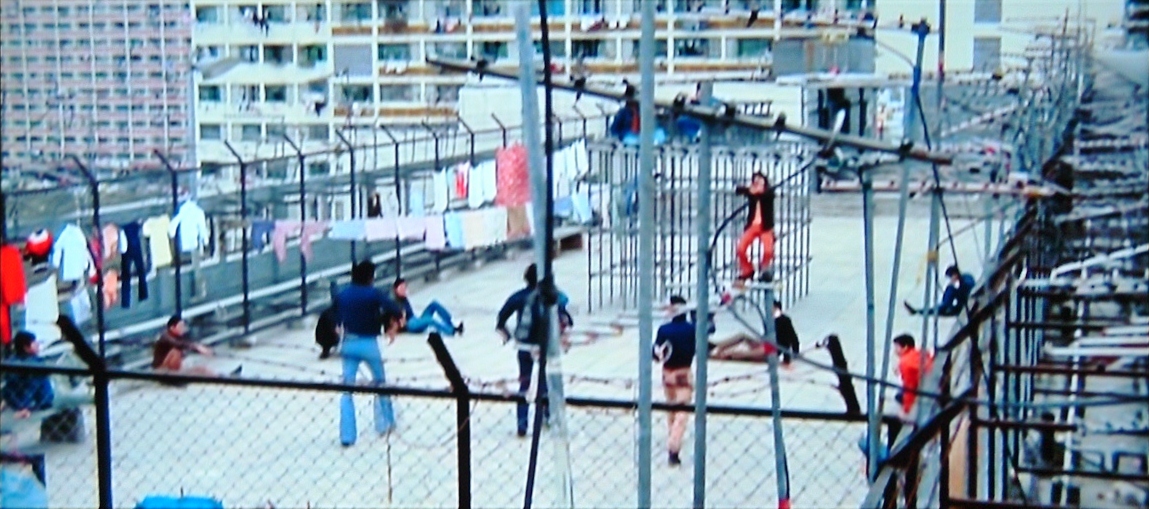
After an intense release like The Delinquent, PF seems subdued, by comparison, but considering the movie was made with the blessing of the HKPF, there's little doubt they had final script approval. This is why parts of the screenplay by Cheh and Ni Kuang feel like a recruiting ad, but it's the HKPF's participation that gives authenticity to the police procedures we see within an hour and 41 minutes, as well as make the film look like it cost more to make than what it actually did. Cheh used his access to police buildings, equipment and personnel to positive results.

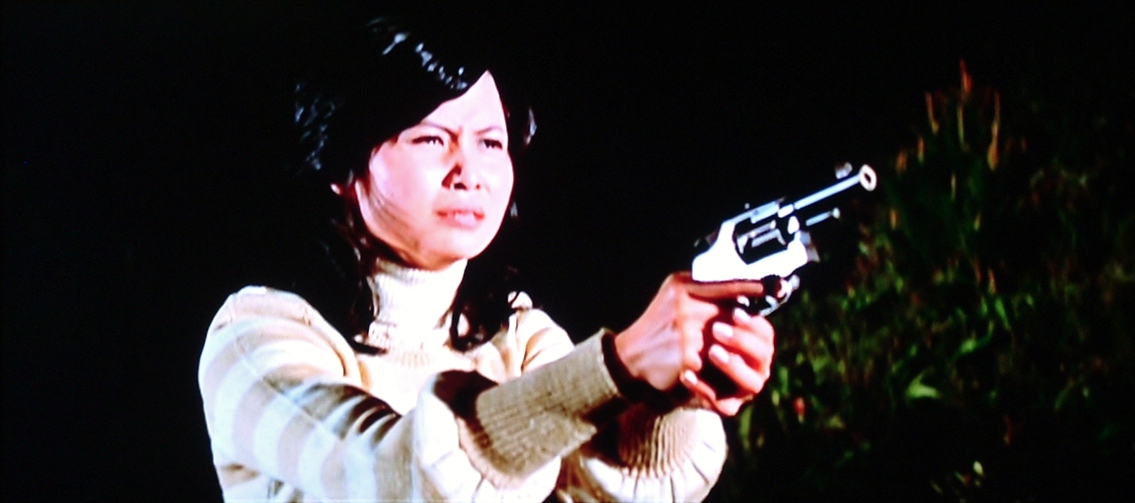
As for straight drama, while a lot of it is familiar stuff, the movie's pacing never lags, so the cliches don't get to hang around. The exception is Yan; Lily Li makes the most of what's written for her (and models a cool '70s wardrobe), but her character lacks real depth. Only when Yan stops obsessing over her boyfriend's killer to assist Guodong during his investigation does she get to be interesting, but it's too little, too late. To top it all off, she has to go into the old bit of getting cold feet when a choice moment to kill the murderer herself arises, which is the only serious lapse in an otherwise decent story. (What? Not even a flesh wound?) Her departure from the film after Tu's apprehension is abrupt as it is anticlimatic; what a waste of talent.

On PF, Cheh works with another co-director, Tsai Yang-ming, whose first film was the '72 independent production The Prodigal Boxer (a telling of the story of Fang Shih-yu that predates Heroes Two by two years). Cheh's style is so dominant throughout, Yang-ming's contributions are hard to decipher, so it's best to consider it more as a Cheh film. At any rate, he's on top of his craft here, with stylish location shooting in HK and involved action sequences, with fight choreography overseen by Lau Kar Leung and Tong Gaai. Save for a few continuity errors (like a "quick dry" Guodong after a dip in the ocean), this is one of the more slicker Cheh movies set in contemporary (1973) times.

There's a lot of good acting to enjoy here. Wong Chung is is ideal as Guodong, a guy who can smack a felon around along with the best of HK's lawmen. Wang Hsieh (The Lady Hermit) as Zuozhong is menacing like a bulldog, and Tung Lin (The Delinquent) looks properly authoritative as Chung's boss, a senior inspector. Among the many other supporting players, watch out for Fung Ngai (Fist of Fury), Bruce Tong, Teung Tak-cheung and Lee Yung-git. In the offbeat casting category, regular "heavy" Fung Hak-on is fun to watch as Guodong's partner (seen in this screencap with the obligatory ugly jacket).

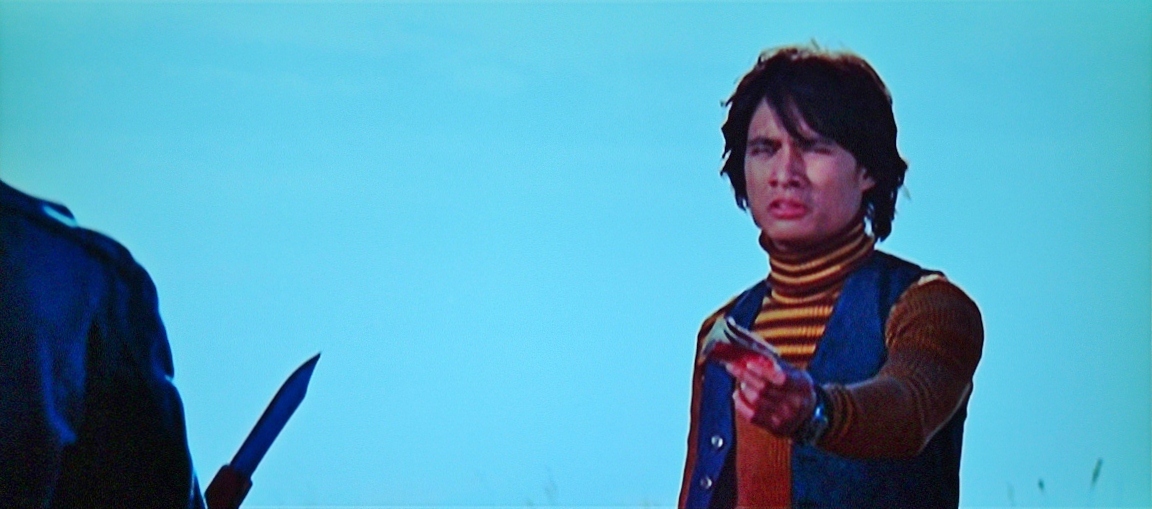
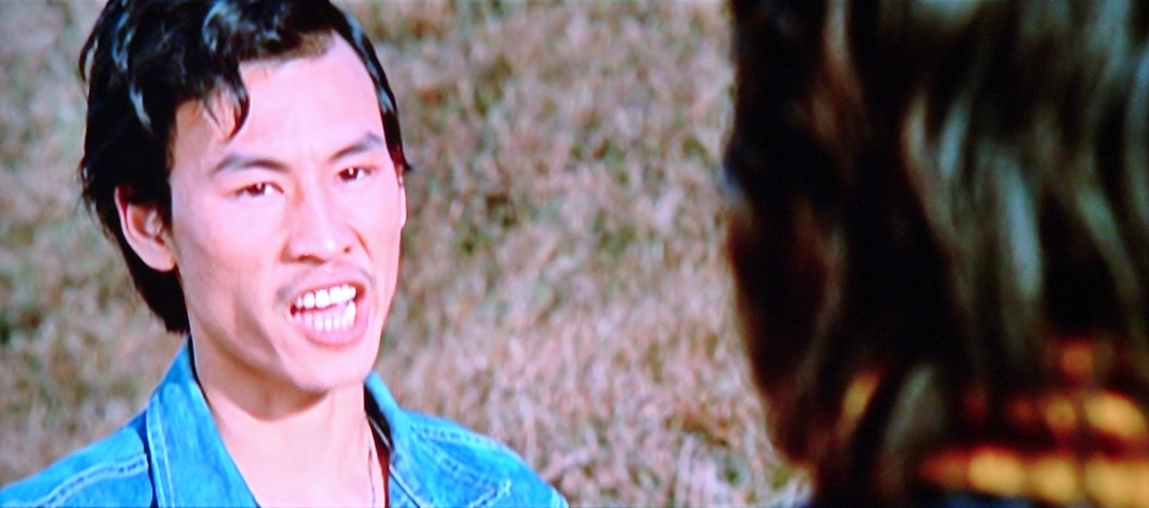
As for Fu Sheng, he handles his screen debut better than expected. He manages to convey his acting range in what little screentime he has as Guan, and his performance is a natural one. He handles his action scenes equally well; his skills are sharp and focused during his scene at a karate tournament, where he takes on Lau Kar Wing (who appears later in two other minor roles). Guan's established quickly enough as a likeable fellow (and loving boyfriend) that when his death comes at the hands of Tu, it is poignant as he expires in a modern version of "heroic bloodshed", and the nasty nature of hs demise makes the desire for revenge Guodong and Yan share all the more potent.


PF is a transitionary film in the genre of crime dramas, HK style; it's a "last gasp" of an era where characters and situations were defined in terms of "black and white", and it's one of the earlier attempts to bring an audience realism through blood, urban grittiness and antiheroes. Guodong's initial motivation for joining the police force (vengeance) is as emotionally complex as the film gets, and for all the violence there is, it's not elaborately staged and meticulously edited. It's still years away from anything like Police Story or Hard Boiled, so anyone who sees PF on the merit it's a Cheh film should expect an "old school" movie and nothing more. In summary, Wong Chung as a '70s "Supercop" is one hell of an experience worth undertaking.

Brother Fang says..."Chang Cheh, Wong Chung and Fu Sheng: three good reasons to check ths out!"

Keeping it trivial....

Fang Shih-yu, Shaolin Temple.

P.S. - While you still can, purchase it at PlayAsia by clicking here.

Tuesday, January 18, 2011

Friends (1974), starring David Chiang, Fu Sheng, Lily Li and Frankie Wei. Directed by Chang Cheh.

(All images courtesy Celestial Pictures.)

IF you combine Rebel Without a Cause with The Bowery Boys, add a dash of Poor Little Rich Girl (in this story, a rich young man), and filter it through director Chang Cheh's "yang gang", the result wiil be Friends. It's the last Shaw Brothers movie Cheh would make in the "younger generation"-oriented vein, as his main focus shifted to the making of the "Shaolin" pictures. Though it was one of those very films (Heroes Two) that introduced HK moviegoers to new star Fu Sheng in early 1974, Friends was actually the first one (with him in a lead role) completed. Its release would be held up until the summer, and while it's only a good guess it did OK box office, what can be confirmed is the "Best Young Newcomer Award" the movie won at the '74 Asian Film Festival. The recipient: Fu Sheng.

After a prologue where we find the title characters have gathered for a reunion, their backstory (the rest of the film) is related as a flashback. Going back to ten years ago, there are just the nine of them (give or take), a bunch of twenty-somethings living a lower-class existence of doing menial jobs by day and raising hell at night; all of them desire to advance their standing in the world and live a better life. The bond of friendship manages to see them through bad times and good. The guys are also fortunate to find the spare time they can to keep their kung fu skills up to snuff, because they're necessary in a big city like HK.

Their unofficial leader is Hua Heng (David Chiang), an advertising sign painter who aspires to become a famous artist. His girlfriend is Gao Xin (Lily Li), a bargirl who might get forced into prostitution by the loan sharks she owes money to if she doesn't pay off her debt of $20,000 [HK].

Into their lives arrives Tu Jiaji (Fu Sheng), the only child of the wealthy Tu Dongtai (Lo Dik). Practicing martial arts only does so much for him; he's unhappy and bored living a sheltered life. One day, when he jumps in to help Heng fight off some street thugs, he's excited to meet someone closer to his age who's cool and can take care of himself. In turn, Jiaji (like a neglected puppy craving attention) trails after Heng to an abandoned warehouse, inadvertently introducing himself to Heng's other friends when he crashes through a sky window above their makeshift gymnasium in the basement.

It doesn't take long for Heng and the others to warm up to Jiaji; they think he's down on his luck like they are. Indeed, when he innocently asks why don't they work out at a "better gym," they think he's kidding around, and they nickname him "Young Master". With this new name, he doesn't bother bringing up his real one. He's also in no rush to go home, so he calls his dad, saying he's spending a few days with some "future" capitalists and not to worry. Concerned as Dontai is, he convinces himself Jiaji's all right and leaves him be.

Once Jiaji hears of Xin's money problems, he's resolved to get her out of trouble with help from another of his new friends, Lin Sibao (Lee Yung-git). While Jiaji pretends to sell some of Heng's paintings, he actually has Sibao get the money from his father (being sure not to mention he is Dongtai's son), using a ring of his (personally given to him by his father) as a means to getting the cash without a hassle. Of course, the instant Dongtai recognizes the ring, combined with the asking for money, he thinks Jiaji's been kidnapped, and he readily gives Sibao the full amount. For all the madness behind Jiaji's method (also driving his father mad), Xin's dilemna is resolved, and Heng comes off like a hero in the process.

Unfortunately, the recently unemployed Sibao is hurting for money, and in an act of weakness, he uses the ring again to extort more money from Dongtai. Worse, he's an acquaintance of the loan sharks, and when he flashes his new wealth in front of them, they can't help but wonder how he got rich all of a sudden. When Sibao tells them, showing them the ring, they realize the "Young Master" is the son of Dongtai, thanks to a newspaper ad he put out in hopes of communicating with the (then non-existent) kidnappers. Under orders from their boss (Frankie Wei), they kidnap Jiaji for real... with assistance from Sibao!

Once Sibao finds out Jiaji will be killed upon the collecting of the ransom (a triple dip into Dongtai's wallet), he finally sees the error of his ways, and he runs off to tell Heng what has occurred. Heng has since found out what Jiaji did for Xin, so once Sibao fills him in on the details of who Jiaji is and his current plight, he makes a frantic dash to rescue Jiaji from his captors, while Xin and Sibao round up the remaining friends for extra support in a race against time.


The most common complaint about Friends centers on how David Chiang and Fu Sheng interact as the leads. Some sense a lack of dynamics between them, which doesn't ring true with the assertion they are supposed to be friends. People forget that Jiaji and Heng get introduced to each other under tense circumstances, and Jiaji doesn't help matters when he ruins Heng's portrait of Xin by smashing it over his chauffeur's head! Further, Heng's trying to break out as an artist while juggling a girlfriend and a job at the same time. For all the friends he has now, the sudden surfacing of Jiaji (who appears to have no friends at the beginning of the film, except his sifu Wang, played by Tung Choi-bo) seems to be one friend too many for him to handle. Once Jiaji gets to meet Heng's other friends, any burden is lifted off his shoulders and distributed to everyone else; only then does he begin to see Jiaji's a nice guy. Significantly, what we are observing is the beginnning of a friendship over the few days' time covered in the film, and by having seen the prologue, we know it will still be thriving ten years later (and counting). As the start of friendships go, Chiang's performance rings true, and it compliments the one delivered by Sheng.

Allowing for the usual Shaw script deficien-cies, the screenplay by Cheh and Ni Kuang is pretty good, but more character development would've been beneficial to the story. (Among the precious few pearls we're given, Bruce Tong's vignette where he dreamily ogles women while working at a pool hall is very funny.) As this is a Cheh movie, we're lucky to have what characterization there is, and while there's more violence here than in Young People, also like that film, nobody dies, so we should appreciate any restraint Cheh decided to use. Even so, our "suspension of disbelief" is tested by how Jiaji gets the money to pay off the loan sharks and what leads to his being abducted. Most importantly, if this happened in the real world, Sibao would wind up in prison for being an accessory to kidnapping!

If you don't dig too deep into it, the movie works well within its low budget, from the photography by Miyaki Yukio (a.k.a. Kung Mu To) to the bone-crunching kung fu co-ordinated by action directors Lau Kar Leung and Tong Gaai. The casting works from the leading roles (though Lily Li is underused) to the supporting players. (As noted previously, the late Chen Wo-fu has a few moments here as Jin Bing-da, a mechanic; hindsight or not, his unique prescence is compelling enough you wish he had a bigger part.)


Out of all the pictures Cheh made, Friends qualifies as his top "sleeper". One look at it, and you'll understand why other Shaw fans pass this up in favor of his bloodiest classics. It's as close as he ever got to doing a "little" film, and at the same time, he conveys his recurring themes of brotherhood and "yang gang" in the most accessible way better than he ever did in his biggest epics. He takes his discovery Fu Sheng and gives him a modest showcase in which to display his bubbling talents. Sheng is up to this early challenge, bringing Jiaji to life as an engaging person. He's rough around the edges with respect to his acting and fighting skills, but any noticeable lapses are smoothed over with his winning personality and (especially for the ladies) sex appeal. Anybody who likes Chang Cheh, Fu Sheng or wanting a break from the "average" Shaw martial arts movie needs to buy (or rent) this.

Brother Fang says..."Fu Sheng fans: BUY this! Everyone else: Give it a test run (rent or borrow one) before investing in a copy!"

Keeping it trivial....

Fang Shih-yu, Shaolin Temple.

P.S. - Purchase it from DDDHouse by clicking here.